Richard L. Smith’s Such a Mind as This: A Biblical-Theological Study of Thinking in the Old Testament underlines the knowledge that really matters: the knowledge of God.
The knowledge of God is the knowledge of genuine reality and at the same time, genuine knowledge of ourselves.
Being wise to the world, expansive and impressive as the world is―its know-how, its technology, its science, its fine arts―pales at being wise to the human condition before a transcendent God.
Smith shows from successive phases of biblical history that the knowledge that human beings believe themselves to possess is decisive. Human knowledge, either depending on God or pretending autonomy from God, is no sidebar to scriptural themes such as God’s character, human sin, or salvation. Smith piles biblical citation on citation to show that reliance on God for wisdom makes a decisive difference.
As Calvin and others affirm, all true knowledge is God’s knowledge. God graciously reveals truth to human beings. What Scripture records is the starting point for wisdom. As Isaiah relayed, “(T)his is the one to whom I (YHWH) will look: he who is humble and contrite in spirit and trembles at my word” (66:2).
Healthy fear of God’s revelation is analogous to the right attitude to a God who holds life and death in his hand. Healthy respect for the one who created, sustains, saves, and redeems human beings is―to say the least―reasonable. Smith works through themes supporting these concerns in his chapters.
So: why does the knowledge of God not seem truly central in Christian schooling or higher education? Why does a book like Smith’s read as if speaking of religious realities, the kind one is concerned about at a morning school assembly or on Sunday? A student leaves the school assembly and is submerged in geography, literature, history, social studies, science, mathematics, or computer science. Much is fascinating in social media, videos, films, music, apparently in their own right, and much of education seems inherently fascinating too. It appears as if these fields possess independent validity. Schools may have chaplains to look after the religious well-being of the students who study fascinating subjects. Their work is comforting, assuring, therapeutic―secondary in nature. They come alongside. If God has anything to say to these fields, it seems like a kind of chaplaincy only.
Posing the God-education issue differently, consider a second scenario. In historical perspective, Catholic religious orders and Protestant missionary societies often founded schools in mission lands to further their Christian aims. If missionaries could educate the young, the young would establish Christian thinking for the future. How then is it possible that these schools sometimes proved to be the most effective possible as secularizing agencies? Did their mandatory Christian aspects such as theology classes, strict discipline, or their chapel requirement somehow turn off students? Accepting children from traditional African or Asian settings, the schools taught individualism and modern attitudes, as well as social organization at odds with ancient traditions that seemed natural to students. When the students later became political leaders, this skewed mindset functioned easily in secularizing governments. The Comaroffs’ historical and anthropological study of evangelical missions in South Africa (1991, 1997) is a catalogue of unexpected readings of missionary work.
A third problem to pose is the God-education issue: In present day Israel, so-called ultra-orthodox groups carry out Scripture studies in yeshivas. They study the ancient texts carefully. Some ultra-orthodox young men go on to become rabbis. However, the ultra-orthodox come under frequent attack from other sections of Israeli society. One reason is that the Israeli state exempts sons and daughters of the ultra-orthodox from military service. One current proposal is that the ultra-orthodox educate their children in a broader curriculum, one to fit them to participate in modern life. In short, ancient religious knowledge must translate into the idiom of modernity. As with Christian education, studying the ancient texts is not sufficient. The education of the young must affirm the relevance of the ancient texts in modern life.
And a fourth way of posing the God-education issue: How did Moses’s youthful education in the wisdom of the Egyptians (Acts 7:22) have to do with the knowledge of God granted to him verbally―at times face-to-face―by the one true God? Were the knowledges separate in Moses’s mind? Even before Augustine in the early 400s, Christian thinkers urged that, as the Israelites accepted the physical gold of their Egyptian neighbors, Christians should adopt the educational goods of unbelievers. Moses and the gold metaphor alerts us: the education problem is the translation or transformation of apparent knowledge into and for the knowledge of the true God. Shifting the metallic metaphor, medieval alchemists sought ways to change base metals into gold; believers now seek to take unbelieving knowledge captive to the knowledge of Christ (2 Cor 10:5). How?
How may the revelation of the transcendent, eternal, all-present, all-powerful God in Christ influence educational practices fitted to present-day life? How can churches maintain a counter-cultural stance without their host societies marginalizing them? (This is the ultra-orthodox question.) The Scriptures that Smith ably lifts up support Cornelius Van Til’s themes such as the dependence of human beings on God for true knowledge, the human capacity for self-deception, analogical but not comprehensive knowledge (thinking God’s thoughts after him), and the inescapable role of presuppositions in generating systems of believing and unbelieving thought (the question of attractive seemingly independent knowledges of popular culture and education). The Van Til themes contradict any optimistic Rousseau-type notion of learners as basically good, who add more and more good things to their stores of knowledge. (This is the Egyptian gold transformation question.) Van Til’s themes surely merit expression in a distinctive pedagogy.
I suggest that Smith supplies readers with the paradigm for education. Encouraging students to acquire knowledge is what education is all about, after all. But the paradigm must undergo translation. In Thomas Kuhn’s study of scientific change, a paradigm is the revolutionary insight that opens the way to a new field of study, generating a new “normal science” which replaces the former way of seeing. The findings of Copernicus, Newton, or Einstein supplied such paradigms which revolutionized their fields. New normal sciences of astronomy or physics, as also in chemistry or medicine, worked out the paradigm insight over time. Similarly, early church history took the Lordship of Jesus Christ in his crucifixion and resurrection as the bedrock of its confession. The church could review and revise all matters Greek and Jewish, but the unshakeable paradigm was the historical fact that “Jesus is Lord.” That immovable confession reviewed all knowledge claims. In this sense, a paradigm is timeless.
Now apply Smith’s paradigm to the practical education of believers. Walter Brueggemann wrote a biblical theology of Old Testament education which emphasizes the progressive nature of the revelation. For Brueggemann, Scripture is precisely for education. Scripture came into being for educational purposes, so the next generation may know Torah, the first five books of the Bible, as the bedrock of Israel’s tradition. Torah is the alphabet, the dictionary; it is the basic reference work that establishes the outline of God and world. It is the paradigm. The prophets form the next layer of revelation and education. They contradict or eliminate (nearly) nothing from the record, but they apply Torah to new historical contexts. The prophets are authorities by their divine inspiration and they interpret Torah. Brueggemann suggests that a third layer―the wisdom writings―elaborate the tradition one step further. Like the prophets, wisdom contradicts nothing of the existing canon. Even Ecclesiastes or Job or the Psalms affirm and deepen the revelation. These deeply challenging texts are Scripture too! The wisdom layer reworks Israel’s understanding of God and the world for new circumstances, producing fresh insights. Thus, Brueggemann points out dynamism in the heart of the Old Testament. The new layers rework the original revelation, making God and world more deeply understood. In effect, Brueggemann sees Torah’s paradigm both upheld and translated in time, “syntagmatically”―within the authoritative canon, no less.
I suggest that educators apply Smith’s paradigm and its Van Tilian themes to their educating work. Each school subject or discipline derives from paradigm insights―presuppositions, if you prefer―which make immoveable poles for reflection. “Integration” is an inadequate term for the reviewing activity. “Integration” connotes two independent realms of knowledge. The educational task is instead “taking captive,” “conforming” knowledge to the image of God in Christ. I do not look for a one-size rubric for this “conforming” work. John Milbank, in a bracing example, relies on Christian orthodoxy to show how deeply political science and sociology depend for their existence on affirmations that are heretical in its terms. Mathematicians, literature teachers, curriculum writers and all Christian educators who seek to be consistently biblical will undertake the same decoding and translation work as Milbank, in their fields.
Smith has laid out Van Til in language that Van Til himself would approve. As Van Til learned from his Princeton biblical theology professor Geerhardus Vos, Smith gives an Old Testament theology of knowledge. He gives us the paradigmatic baseline for practical educational reflections.
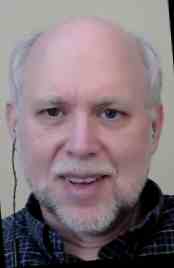 Ted Newell is a professor of education at Crandall University, Moncton, Canada, where he teaches education theory courses to bachelor’s and master’s degree students, a visionary management course for organization students, and a course on Jesus as educator. His work in education started with a business skills curriculum for early school leavers in Papua New Guinea in the 1980s. His articles on Christian liberal arts education, narrative approaches to education, Jesus as a teacher, and the aims of education are in Journal of Education and Christian Belief, Journal of General Education, Religious Education, and elsewhere. He is a pastor in the Canadian Baptist family of churches, and earned an M.Div. from Westminster Theological Seminary (1994) and an Ed.D. in religion and education from Columbia University (2004).
 Such a Mind as This