Moses was a model thinker in ancient Israel. He was supremely knowledgeable and wise. He feared God and modeled intellectual virtue. His theological outlook was expressed in Deuteronomy, the nation’s covenantal masterpiece. His mental piety was articulated in the Psalms. His teaching and character deeply impacted the Old and New Testaments. Jesus and Paul viewed Moses with the highest regard.
Numbers 12 summarizes Moses’ epistemic profile, “Now the man Moses was very meek, more than all people who were on the face of the earth” (v. 3). Moses embodied intellectual humility, even in the face of strident criticism (see vs. 1–2). God said about him, “He is faithful in all my house. With him I speak mouth to mouth, clearly, and not in riddles, and he beholds the form of the Lord” (vs. 7b–8a). Moses reasoned, therefore, from and with revelation. His aligned his motivation, attitude, speech, and conduct with God’s law.
In addition to receiving instruction directly from the Lord, Acts 7:20 provides this description of Moses’ intellectual formation, “Moses was instructed in all the wisdom of the Egyptians, and he was mighty in his words and deeds.” In its battle with foreign influence, Jewish tradition often expressed haliographic and apologetic agendas concerning Moses and his legacy. For instance, Moses taught authentic philosophy and invented alphabetic composition. Egypt taught him music and mathematics. The Greeks instructed him in grammar and astronomy. A scholar described this common belief in antiquity, “Moses acquired from the inhabitants of the neighboring countries a knowledge of Assyrian letters [their worldview], as well as the Chaldean science of heaving bodies [astrology, divination, sorcery, magic].”[i] Legends such as these, however, are improbable.
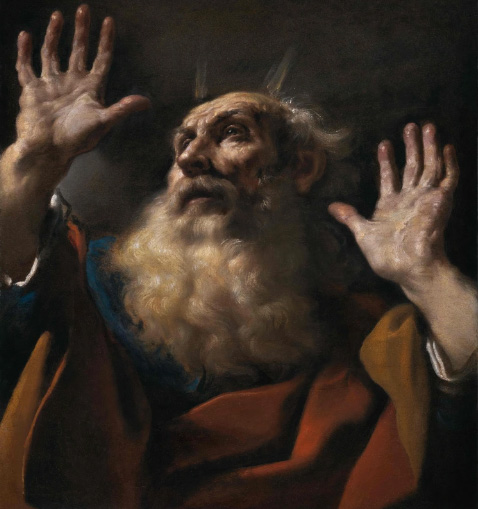
A greater likelihood is that the “wisdom of the Egyptians” entails four mental and social attributes.[ii] First, as a member of the royal court (Exod 2:10), Moses imbibed Egyptian ideology. According to their worldview, Pharaoh was divine, associated with the gods of creation and he was the incarnation of Horus, the nation’s divine protector. As the intermediary between heaven and earth, Pharaohs functioned as high priests. They were worshipped and they provided benefaction in support of the nation’s theocracy. They upheld primeval order and embodied its principles.
Second, Egypt’s kings embraced an imperial mindset. By divine decree, they were charged with subjugating other peoples and creating an empire. Egyptian ideology expressed an “Egyptocentric” mentality affirming their supremacy over all other nations. They viewed other peoples and their religions with upmost disregard and suspicion. Thus, “when Pharaoh asked, ‘Who is the Lord, that I should obey him and let Israel go?’ he asked a very important question . . . In effect, his query was: Who is the true God?” I wrote:
His question also implies several other crucial questions that recur in the Old Testament. Who are the real people of God? In which society might humans flourish? Through whom will the earth be blessed—Cain’s progeny (all god-kings and would-be empires) or the seed of Abraham? Which is the true land of promise, Egypt (another theocracy or utopia) or Canaan?[iii]
Third, Moses was likely well-acquainted with Egyptian spiritual technology: magic, divination, and sorcery (Exod 7:9–12). Likewise, he understood the social-economic status associated with the religious and intellectual elite of the nation. Moses experienced a “social and religious infrastructure” that “was skewed by polytheism, theocracy, and empire.”[iv] The royal court, its powerful wise men, and the retainers who served them, benefited economically from forced servitude of the Hebrews and other enslaved peoples.
Fourth, the curriculum that Moses learned was probably like the indoctrination Daniel encountered as an exile in Babylon (Dan 1:4–7).[v] He learned the language of Babylonia and studied their worldview texts as future scribes and counselors. In this way, he internalized the ideological and spiritual priorities of Babylon. And he was socialized into the lifestyles of the religious and intellectual leaders of society. “Cultural literacy enabled conceptual fluency—the ability to reason from ontological and epistemological presuppositions embedded in the Babylonian worldview.” [vi] Daniel would, then, counsel the king as a wise man of Babylon―not as pious Hebrew from Israel, they hoped.
Finally, Hebrews 11:24–26 summarizes Moses’ mindset when he returned to Egypt as Israel’s leader. He rejected all that the Egyptian worldview represented and provided as a member of the highest class in the nation:
By faith Moses, when he was grown up, refused to be called the son of Pharaoh’s daughter, choosing rather to be mistreated with the people of God than to enjoy the fleeting pleasures of sin. He considered the reproach of Christ greater wealth than the treasures of Egypt, for he was looking to the reward.
The three underlined verbs express intellectual, ethical, and spiritual intent. First, after Moses’ mental outlook matured, he “refused to be called the son of Pharaoh’s daughter.” He repudiated the identity and socialization of Egypt. Second, he chose “to be mistreated with the people of God than to enjoy the fleeting pleasures of sin.” This determination implied theoretical and moral evaluation. Moses deemed Israel and its calling under God of much greater value than the very best that Egypt could offer. Third, from a New Testament perspective, Moses “considered the reproach of Christ greater wealth than the treasures of Egypt, for he was looking to the reward.” By faith, Moses reasoned eschatologically. He anticipated a far greater prophet and savior than himself (Deut 18:15, 18).
Moses, therefore, embodied wisdom and mental piety derived from godly fear (Prov 1:17; 8:13). He modeled the Shema (Deut 6:4–5) and aspired to love God with “all his mind” (Mark 12:30).
For these reasons, Moses serves as a model thinker for the church today. We ought to replicate his mentality. We should “refuse to be called (fill in the blank),” meaning identities and socializations imposed upon us. We should turn from the “fleeting pleasures of sin” that hinder and distract from Christ’s mission. Our thinking must change, if we truly “consider the reproach of Christ greater wealth than the treasures of (fill in the blank).”
Imagine how our spirituality would evolve if we, like Moses, learned to love God with our minds and developed intellectual piety rooted in the fear of the Lord.
[i] Louis H. Feldman, “Philo’s View of Moses Birth and Upbringing,” page 275.
[ii] This paragraph derives from my book, Such a Mind as This, pages 74–81.
[iii] Such a Mind as This, page 89.
[iv] Such a Mind as This, page 80.
[v] Such a Mind as This, pages 371–373.
[vi] Such a Mind as This, page 372.
 Such a Mind as This