Quote of the Week!

Until their fateful encounter with the snake, Adam and Eve avoided several errors that plague the human race to this day. They did not posit a false ontological similarity between themselves and God, nor did they assume an absolute ontological dissimilarity with God. They did not presume an independent and transcendent rationality to which they and God were both accountable. They rejected secularity, which would leave some aspects of existence devoid of God’s care or accountability. They did not presume an objective or neutral posture apart from the covenant, as if anything lacked divine interpretation. They did not assume a critical or skeptical stance before God and hold him to account. They did not embrace instrumentalism, whereby knowledge exists for pragmatic purposes alone or for the manipulation of the divine. (Such a Mind as This, 41–42)

A Call and a Command

I have been thinking for some time about the universal command to love God with the mind and the specific calling to intellectual achievement (in whatever field).

Some Christians and especially the intellectual leaders of the church are called to higher levels of knowledge and wisdom. In fact, Christian thought leaders in every field should understand deeply the biblical worldview and how to engage cultures in evangelism, apologetics, and for the common good.

On the other hand, everyone who is a Christian receives a command to love God with the mind (Deut 6:4-5; Mark 12:30). How this works out in practice depends on many variables, including access to learning formats, economic resources, and aptitude.

In neither case, of call or command, is anti-intellectualism or biblical ignorance a God-honoring option. Theological illiteracy is also spiritually dangerous.

In its broader context, both the specialized call to the life of the mind and general command to intellectual piety are part of a wholistic spirituality that loves God with all the mind, soul, and strength, and also loves their neighbor (Mark 12:30-31).


Guest Blog by Alejandro Toja Oviedo

Artificial intelligence, teaching and intellectual training: a contribution to the debate on AI in Johann Neem’s “Learning to Grapple with the World.”

This article is a response to “Learning to Grapple with the World,” by Johann Neem, recently published as part of the series “What does every university and college student need to learn?”. In it, Neem lucidly analyzes the transformations that higher education is going through, pointing out with concern the growing disinterest in reading, the pressure for performance, and the use of artificial intelligence as ways to avoid intellectual effort. To provide context, here is Neem’s opening paragraph:

It is a difficult time to be a college professor, just as it is to be a student. For various complicated reasons, students are coming to campus less prepared and less willing to engage in the kind of work—reading and writing particularly—that has long been required to become college-educated. Moreover, thanks to generative AI, students can now produce workable papers without doing any of the thinking once required. This means that students are neither capable nor needing to engage deeply with subject matter. They can avoid being educated and still get a degree.

Based on his proposal, and from a perspective situated in the Argentine and Latin American context, I would like to broaden the conversation by considering the impact of these dynamics in our classrooms and underlining the need for an ethical and pedagogical response that recovers the formative meaning of education.

The article exposes a reality that has become evident at all levels of the formal education system, particularly in the last two years in Argentina, although in greater depth in the United States and Europe. It’s a fact: many students use artificial intelligence (AI) to filter texts, summarize them at key points, extract hypotheses and conclusions, and even generate new ideas from them. In many cases, they present these results without additional personal evaluation and still get a passing grade. This phenomenon is not only possible, but it is already happening.

However, this panorama also highlights certain shortcomings in our teaching practices. As teachers, we sometimes avoid taking responsibility. Are oral and written evaluations designed to evaluate the real understanding of the work presented? Is a report requested that accounts for the student’s research process? Do universities have AI-based tools to detect fraud or identify content generated by other artificial intelligences? These technologies already exist, and they could complement strategies that foster richer interaction between teachers and students—not only as control mechanisms, but as forms of genuine accompaniment in learning and knowledge production.

This problem is also linked to two urgent issues within the academic field of the humanities and social sciences. Although in disciplines such as engineering or medicine, full automation is still unfeasible. That there are significant difficulties related to AI and the learning process in general are already beginning to be observed.

First, there is a marked lack of interest in reading. Although many students are drawn to specific topics in their education, they rarely develop systematic reading habits. The causes are multiple: distractions typical of the digital environment, lack of commitment, difficulties in reading comprehension—a growing problem in Argentine secondary education—and socioeconomic conditioning that directly affects academic performance.

Secondly, the demotivation of the teaching staff aggravates this scenario. Factors such as low wages, work overload—expressed in massive classes and the correction of multiple papers and essays—and the lack of specific training in new technologies, undoubtedly affect the quality of teaching. As a teacher and student, I recognize that this tension is clearly perceived from both sides of the classroom.

However, AI should not be seen solely as a threat. It can also become a valuable tool for enriching learning. Its responsible use can contribute a lot, from organizing ideas and grammatical correction, to searching for information in databases and digital libraries, offering more accurate results than conventional search engines. It can even facilitate the comparison between divergent ideas and the elaboration of creative syntheses that strengthen academic production.

Of course, like all technology, AI is not exempt from errors or possible misuses. It may omit relevant data or give misleading answers, so its implementation in the classroom must be guided by well-defined ethical and pedagogical criteria.

Faced with this reality, I consider it urgent to establish a specific academic deontology for the use of AI in higher education. This involves training students in both ethics and the design of prompts (indications and commands given to AI) that allow them to complement their training without replacing critical thinking or deep reading. It also requires establishing clear rules to prevent academic fraud and strengthen the relationship between teachers and students, ensuring rigorous accompaniment, especially in the first years of all careers. To this end, the participation of specialists in each discipline is key.

Also, we cannot lose sight of the impact that socioeconomic inequality has on access to these tools. While there are free versions of AI, its features are limited compared to paid options, which could open up new gaps in access to education and academic opportunities.

Finally, from the beginning of the Industrial Revolution until today, humanity has managed to adapt to technological advances, overcoming in many cases the resistance of technophobic movements. A large part of this capacity for these advances and the adaptation to them are due to the scientific, philosophical, political, cultural and educational legacy of the Reformation. In fact, the immense legacy of the main houses of higher learning is threatened, not only by persistent socio-economic inequalities, as I mentioned earlier, but also by the abandonment of a Christian ethic and worldview, which were for centuries the root and engine of the Western educational project.

Given the current pace of change is faster than ever, this forces us to urgently rethink how we will adapt to this transformation without sacrificing the quality of knowledge or equity in access to education—and challenges us, as Christians, to be a light in a Western culture that has left its Christian roots behind.

Alejandro is the Operations Coordinator for our Kuyper Center for Christian Studies. He has a degree in history and teaches in a high school.
 

“Oh, The Depth of The Riches and Wisdom and Knowledge of God!”

This is a reprint and revision of a blog posted on April 3, 2012.

Paul expressed this proclamation in Romans 11:33, knowing that the nation of Israel was being undermined by pagans. He acknowledged that God hardened Israel’s hearts due to disobedience (Rom 9–11; Ps 81:11–12). Earlier he exclaimed, “I have great sorrow and unceasing anguish in my heart. For I could wish that I myself were accursed and cut off from Christ for the sake of my brothers, my kinsmen according to the flesh” (9:2–3).

Why could Paul praise God’s great wisdom, knowing the terrible fate that befell his nation?

Because he realized that only through Israel’s failure to acknowledge their Messiah would the gospel go to the ends of the earth. Clearly, Paul’s worldview was broader and deeper than his nationalism or his Jewish heritage.

Who could praise God for this unexpected wisdom at that time? Certainly, only those more committed to the kingdom of God than lesser priorities, like culture and tradition and personal welfare.

Imagine our age and our social-economic context today. Could we confess God’s great wisdom if all that we are accustomed to were reversed or even destroyed―for the sake of his kingdom? What if the gospel advanced through the suffering of our nation or the loss of its power and prosperity?

For example, biblical scholars teach that perhaps the greatest threat to the gospel and church today is consumerism. Can you imagine a civilization without consumerism? What would happen to us, our lifestyles, and our churches if our economic system ceased to exist as we know it?

Or imagine an authoritarian ideology that transformed our country. What would happen to the church if the state demanded political fealty over gospel adherence? What would we choose?

What if natural disaster (solar flare, earthquake, disease) or manmade conflagration (terrorist attack, asymmetrical warfare, or regional nuclear war) destroyed our economic or communications infrastructure?

What if God permitted this to happen to promote the gospel and purify the church? Would we be able to declare, “Oh, the depth of the riches and wisdom and knowledge of God”?

So, the question for the Christian is, what are our priorities?

Is it a certain lifestyle?

A particular economic or political system?

A specific social or cultural preference: economic, racial, ethnic or religious?

What if God imposed this judgment on our nation, as he did to ancient Israel: “But my people did not listen to my voice; Israel would not submit to me.  So I gave them over to their stubborn hearts, to follow their own counsels” (Ps 81:11–12)? What if, in God’s wisdom and for his glory, disaster purifies the church and extends the kingdom of God?

Is our biblical theology deep and broad enough for whatever happens? Could you and I acknowledge God’s wisdom and demonstrate his love, even if our world were changed radically?

According to the Bible, God has higher priorities and long-term goals that might be different than our comfort, political-economic preferences, advanced technology, or vaunted civilization.

“Oh, the depth of the riches and wisdom and knowledge of God!”

Quote of the Week!

The book of Deuteronomy teaches once again that repentance and the fear of God are the gateway to redemptive epistemology. Moses, Joshua, and Caleb knew that heeding or not heeding God’s voice meant life or death, flourishing or privation, knowledge or folly. They understood that the source of everything that happened to them and all they aspired to was God. Indeed, he was the bond that held their world together and the presupposition of their worldview. For them, nothing was truly secular and no other ideology could be syncretized with the Lord’s revelation. They acknowledged the covenantal imperative to listen diligently to his voice alone, since there was no justification for intellectual disloyalty. (Such a Mind as This, p. 257)

Five Introductory Books About Apologetics

When I am asked about learning apologetics, I often refer to people five basic texts. Below I describe briefly each one for your consideration. I also suggest that you read them in the order presented.

Every Thought Captive by Richard L. Pratt (142 pages)
The author provides a clear and simple biblical-theological overview for doing apologetics. Chapters 9–13 concern tactical guidance for defending the faith. The “Apologetic Parable” (a hypothetical dialogue) representing evidentialist, rationalist, and presuppositional methodologies is worth the price of the book.

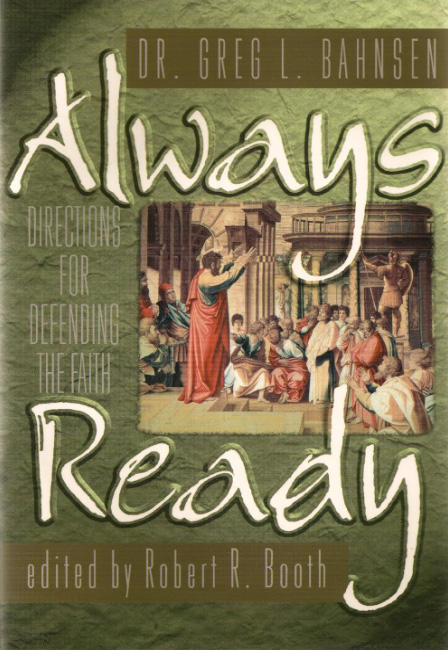
Always Ready by Greg L. Bahnsen (289 pages)
The book contains thirty-five chapters organized under five headings: The Lordship of Christ in the Realm of Knowledge, The Conditions Necessary for the Apologetic Task, How to Defend the Faith, The Conditions Necessary for Apologetic Success, and Answers to Apologetic Challenges. There is also a Biblical Exposition of Acts 17.

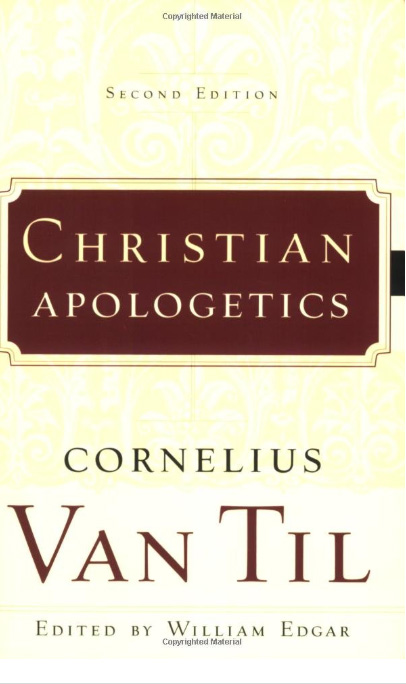
Christian Apologetics by Cornelius Van Til (206 pages)
This is the classic text by Van Til and with an excellent Introduction by my mentor at Westminster Theological Seminar, William Edgar. The chapters describe principles of Van Til’s presuppositional (or transcendental) method, including The System of Christian Truth, The Christian Philosophy of Life, The Point of Contact, The Problem of Method, and Authority and Reason. This book is highly recommended.

Covenantal Apologetics by K. Scott Oliphint (277 pages)
The author is a retired professor of apologetics at Westminster Theological Seminary. The Forward is provided by William Edgar. The chapters are: Always Ready, Set Christ Apart as Lord, Proof to All Men, We Persuade Others, We Destroy Arguments, Walk in Wisdom Towards Outsiders, and You Are Very Religious. This text features reflections about apologetics based on passages in the Bible.

Tactics: A Guide to Effectively Discussing Your Christian Convictions by Gregory Koukl (144 pages)
This is a study with exercises arranged in six sections. It is best utilized in a group, where the rhetorical techniques can be practiced and refined.


Quote of the Week!

Redemptive epistemology presumes repentance so that we will listen to God’s voice in Scripture and creation. His words provide the only legitimate guidance by which to interpret and engage reality. Listening is also another way to express the fear of the Lord and a mind that understands. (Such a Mind as This, p. 207)

A Christian Studies Center in Buenos Aires!

Many of you know that I have lived in Buenos Aires―for fifteen years. For about ten years, informally and now formally, friends and I have functioned as a learning community. We are discovering how to love God with our minds and to engage the culture with the biblical worldview.

These are the vision and mission of the Centro de Estudios Cristianos Kuyper:

Vision: We want to be a community that cultivates thinking about all of reality in light of the biblical worldview and exerts a redemptive and missional influence in the university, the public sphere, and the church.

Mission: We provide a space for community dialogue and learning based on the biblical worldview, offering resources, programs and services to students, academics, leaders, and anyone who wants to participate, with a local and regional focus.

Two members of our leadership team commented:

After years of reflection on how to love God with our minds and how to encourage the local church to do the same, our first conferences at the Kuyper Study Center have given us a very pleasant surprise: the church in Argentina has begun to awaken. Many have expressed with enthusiasm that this is the place they needed to bring their doubts and ideas. (Micaela Ozores)

We perceive a need among Christians associated with the university, such as academics and students, for a study center … where one can learn and openly debate topics that are rarely discussed in local churches or in culture in general. This Center has significant potential in formative, apologetic and evangelistic terms in the context and history of our country. (Alejandro Toja)

We invite you to learn more about us. If you read Spanish, check out our website. Read our recent newsletter in English. To learn about our namesake,  Abraham Kuyper, read this short document.

Please share this blog with your friends!

My email address is comenius1251@gmail.com


Quote of the Week!

According to the prologue of book of Proverbs, two classes of thinkers—the would-be wise and the fool—begin from different starting points. The former presumes the fear of the Lord as the foundation of knowledge, while the other begins from a rebellious stance. One presupposes Yahweh’s rule, but the other negates his relevance. One path leads to deeper knowledge of God, as well as to righteousness, justice, and equity. The other produces disori­entation and destruction. (Such a Mind as This, p. 151)