Artificial intelligence, teaching and intellectual training: a contribution to the debate on AI in Johann Neem’s “Learning to Grapple with the World.”
This article is a response to “Learning to Grapple with the World,” by Johann Neem, recently published as part of the series “What does every university and college student need to learn?”. In it, Neem lucidly analyzes the transformations that higher education is going through, pointing out with concern the growing disinterest in reading, the pressure for performance, and the use of artificial intelligence as ways to avoid intellectual effort. To provide context, here is Neem’s opening paragraph:
It is a difficult time to be a college professor, just as it is to be a student. For various complicated reasons, students are coming to campus less prepared and less willing to engage in the kind of work—reading and writing particularly—that has long been required to become college-educated. Moreover, thanks to generative AI, students can now produce workable papers without doing any of the thinking once required. This means that students are neither capable nor needing to engage deeply with subject matter. They can avoid being educated and still get a degree.
Based on his proposal, and from a perspective situated in the Argentine and Latin American context, I would like to broaden the conversation by considering the impact of these dynamics in our classrooms and underlining the need for an ethical and pedagogical response that recovers the formative meaning of education.
The article exposes a reality that has become evident at all levels of the formal education system, particularly in the last two years in Argentina, although in greater depth in the United States and Europe. It’s a fact: many students use artificial intelligence (AI) to filter texts, summarize them at key points, extract hypotheses and conclusions, and even generate new ideas from them. In many cases, they present these results without additional personal evaluation and still get a passing grade. This phenomenon is not only possible, but it is already happening.
However, this panorama also highlights certain shortcomings in our teaching practices. As teachers, we sometimes avoid taking responsibility. Are oral and written evaluations designed to evaluate the real understanding of the work presented? Is a report requested that accounts for the student’s research process? Do universities have AI-based tools to detect fraud or identify content generated by other artificial intelligences? These technologies already exist, and they could complement strategies that foster richer interaction between teachers and students—not only as control mechanisms, but as forms of genuine accompaniment in learning and knowledge production.
This problem is also linked to two urgent issues within the academic field of the humanities and social sciences. Although in disciplines such as engineering or medicine, full automation is still unfeasible. That there are significant difficulties related to AI and the learning process in general are already beginning to be observed.
First, there is a marked lack of interest in reading. Although many students are drawn to specific topics in their education, they rarely develop systematic reading habits. The causes are multiple: distractions typical of the digital environment, lack of commitment, difficulties in reading comprehension—a growing problem in Argentine secondary education—and socioeconomic conditioning that directly affects academic performance.
Secondly, the demotivation of the teaching staff aggravates this scenario. Factors such as low wages, work overload—expressed in massive classes and the correction of multiple papers and essays—and the lack of specific training in new technologies, undoubtedly affect the quality of teaching. As a teacher and student, I recognize that this tension is clearly perceived from both sides of the classroom.
However, AI should not be seen solely as a threat. It can also become a valuable tool for enriching learning. Its responsible use can contribute a lot, from organizing ideas and grammatical correction, to searching for information in databases and digital libraries, offering more accurate results than conventional search engines. It can even facilitate the comparison between divergent ideas and the elaboration of creative syntheses that strengthen academic production.
Of course, like all technology, AI is not exempt from errors or possible misuses. It may omit relevant data or give misleading answers, so its implementation in the classroom must be guided by well-defined ethical and pedagogical criteria.
Faced with this reality, I consider it urgent to establish a specific academic deontology for the use of AI in higher education. This involves training students in both ethics and the design of prompts (indications and commands given to AI) that allow them to complement their training without replacing critical thinking or deep reading. It also requires establishing clear rules to prevent academic fraud and strengthen the relationship between teachers and students, ensuring rigorous accompaniment, especially in the first years of all careers. To this end, the participation of specialists in each discipline is key.
Also, we cannot lose sight of the impact that socioeconomic inequality has on access to these tools. While there are free versions of AI, its features are limited compared to paid options, which could open up new gaps in access to education and academic opportunities.
Finally, from the beginning of the Industrial Revolution until today, humanity has managed to adapt to technological advances, overcoming in many cases the resistance of technophobic movements. A large part of this capacity for these advances and the adaptation to them are due to the scientific, philosophical, political, cultural and educational legacy of the Reformation. In fact, the immense legacy of the main houses of higher learning is threatened, not only by persistent socio-economic inequalities, as I mentioned earlier, but also by the abandonment of a Christian ethic and worldview, which were for centuries the root and engine of the Western educational project.
Given the current pace of change is faster than ever, this forces us to urgently rethink how we will adapt to this transformation without sacrificing the quality of knowledge or equity in access to education—and challenges us, as Christians, to be a light in a Western culture that has left its Christian roots behind.
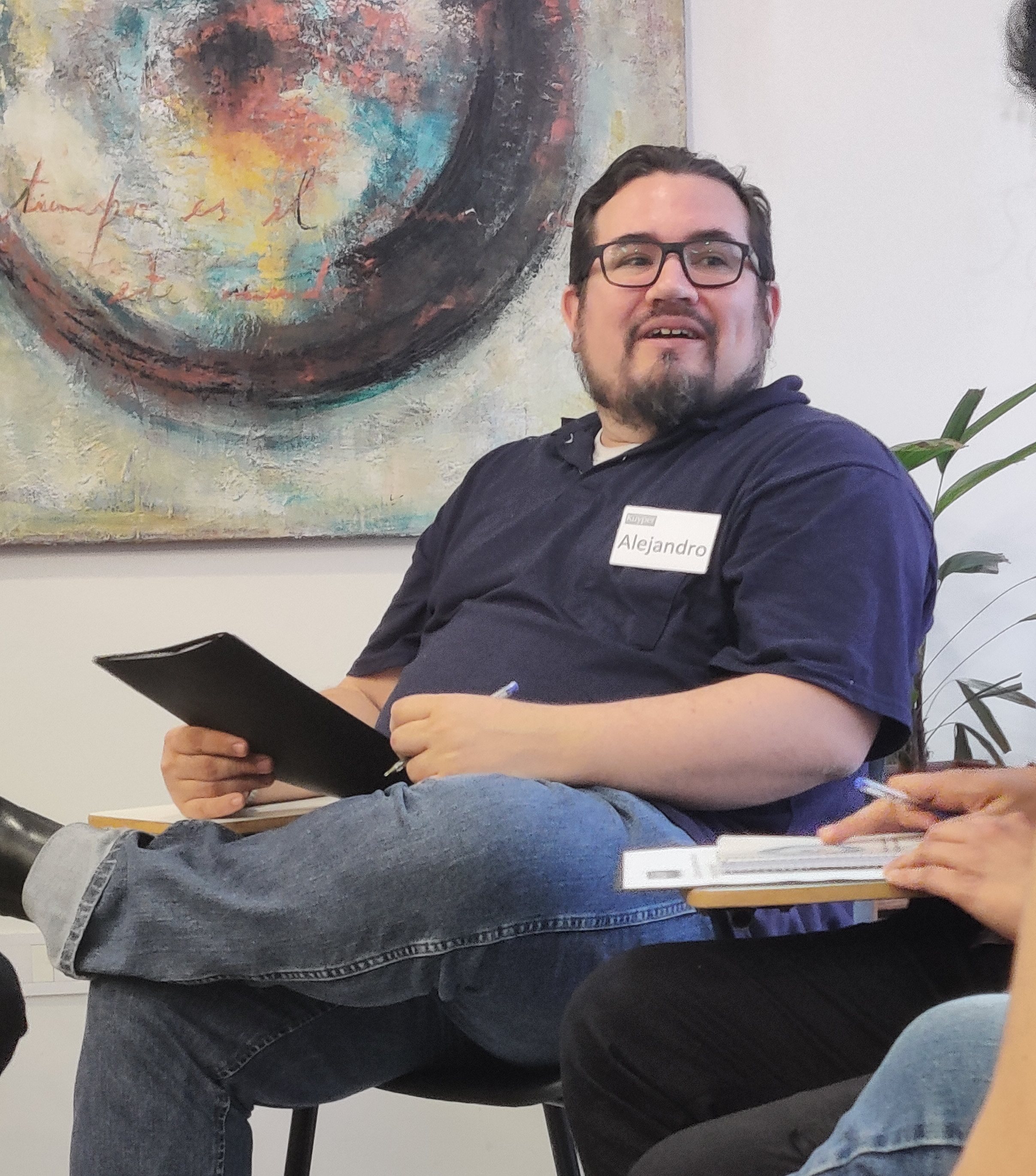 Alejandro is the Operations Coordinator for our Kuyper Center for Christian Studies. He has a degree in history and teaches in a high school.
 Such a Mind as This