The Intelligence of Trump Supporters (Guest Blog)

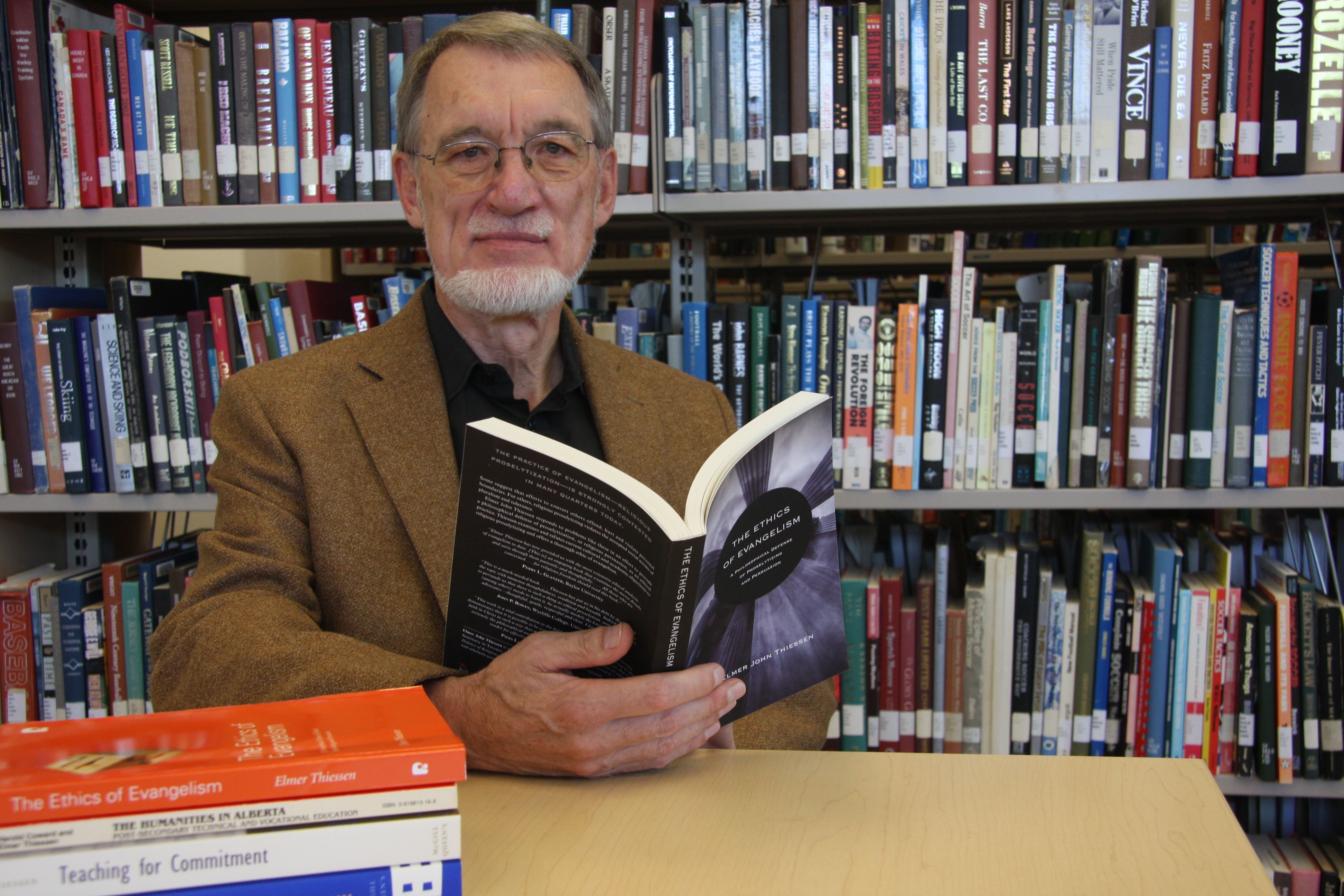
Dr. Elmer J. Thiessen

My wife and I went to Stratford (Canada) for the first time after the pandemic, enjoying a performance of Shakespeare’s Richard III. During the intermission we couldn’t help overhearing a conversation behind us, comparing Donald Trump to Richard III. Though somewhat sympathetic with this comparison, I was dismayed about what I heard next: “The supporters of Trump must all have very low intelligence.” Fortunately, the performance of the play resumed and the conversation had to end.

There is an arrogance here which is worrisome. We are the intelligent ones, and anyone who supports Trump just doesn’t measure up. This kind of comment also commits the Ad-hominem fallacy. It involves attacking people rather than the views they hold. And where is the evidence for this claim? I’m sure the range of intelligence of Trump’s supporters is roughly the same as that of the population at large. And I happen to know that some of Trump’s supporters even have Ph.D.’s.

This is not at all to say that there isn’t some justification for comparing Trump to Shakespeare’s portrayal of Richard III. Both are the epitome of wicked, ruthless, narcissistic, manipulative, and power-hungry leaders. How can anyone still support Trump when there is growing evidence that he was directly responsible for the insurrection on Capital Hill? So I am not at all a fan of Donald Trump and can’t understand the level of support he still enjoys. But I believe it is a mistake to claim that Trump supporters have low intelligence. What then are some alternative explanations for the division of opinion on Trump and his supporters?

For one, the strong divide between Trump supporters and critics is due to differing interpretations of what he does and what is happening in the U.S.A. Here we need to distinguish between facts and interpretations of facts. Sadly, Trump himself often failed to make this distinction when he talked about “alternative facts.” There can be no alternative facts. Facts just are what they are. But there can be alternative interpretations of facts.

This raises the additional question as to how we can evaluate competing interpretations of facts, or the worldviews that underlie competing interpretations. Evaluating alternate interpretations and worldviews is a complex affair, and I believe most people, including philosophers, have not paid sufficient attention to this epistemological problem. While we can’t resort to simplistic appeals to facts or scientific verification, there are criteria to determine when one interpretation is better than another. For example, we need to ask which interpretation is better able to account for all the facts. Simplicity, elegance and explanatory power are additional criteria.

There is another explanation as to why there is such strong disagreement about Trump and so many other issues. Rather than questioning the level of intelligence of those we disagree with, we need to remember that intelligence can become twisted. Our thinking can be corrupted. The Bible declares that all of us are sinful by nature. Sin also affects our minds. Thus, Jesus talks about eyes that do not see and hearts that don’t understand (John 12:40). Paul talks about thinking becoming futile, and hearts being darkened (Rom 1:21).

Here it is most important to note that this problem of warped thinking applies to all of us. Both the supporters and the critics of Trump suffer from minds that twist the data. Both have a tendency to be biased in looking at the facts. Both are in danger of being closed-minded. Both are prone to intellectual arrogance.

So what is the solution to this epistemic problem which is of course much broader than divided opinions about Donald Trump? It won’t help to engage in more argument. Nor will more education solve the problem. Instead, we need to focus more on the complex problem of evaluating interpretive frameworks. We need a better understanding of what is involved changing one’s worldview.

But ultimately, we need to face the fact of sin which corrupts our thinking. We need conversions of the heart which will lead to conversions of the mind. It is only such conversions that will allow us to cultivate the intellectual virtues which are so necessary in a climate of growing polarizations. We need to be people who genuinely love the truth, who are open-minded, who approach the other with an attitude of intellectual generosity, and who always demonstrate intellectual humility about the convictions they hold.
A New Book Review

Read this review in The Joyful Life online magazine!

“His ultimate goal in this endeavor is to encourage believers to mature in their faith by turning from an ‘anti-intellectualism’ mindset, a fear of knowledge, or biblical illiteracy, to one which shepherds fellow Christians into the beauty of learning to love God with their minds.”

Four Books About Idolatry

There are many useful books about idolatry, but in this blog I recommend four for your consideration. Each of these books describe the misdriection of mental capacity to unworthy objects and causes.

First, you should begin with Greg Beale’s We Become What We Worship: A Biblical Theology of Idolatry. The book is an examination of the Old and New Testaments concerning what, how, and why idol worship occurs, as well as its impact. Though the title might sound academic, the text is quite readable and interesting. Beale writes:

What do you and I reflect? . . . God has made humans to reflect him, but if they do not commit themselves to him, they will not reflect him but something else in creation. . . . What people revere, they resemble either for ruin or restoration.

Second, read Jacques Ellul’s The New Demons. The chapter titles tell you what the book is about: Post-Christian Era and Secularization, The Sacred Today, Modern Myths, Secular Religions: Current Religious Attitudes, Secular Religions: Political Religion, and Coda for Christians. His analysis of secular religions and political religion is profound and prophetic. He described two mistakes the church has made:

1) Constantinism: an orientation toward wanting to win over to Christianity the rich, the powerful, the control centers . . . . 2) The cultural mistake: the incorporation into Christianity of all the cultural values. Christianity becomes the receptible for all the civilizations of the past, the establisher of culture and a synthesis of the philosophies.

Third, read Tim Keller’s popular-level book Counterfeit Gods: The Empty Promises of Money, Sex, Power, and the Only Hope that Matters. The book is a pastoral discourse on the many idols that define popular culture in the West. Keller writes:

An idol is something we cannot live without. We must have it, and therefore it drives us break rules we once honored, to harm others and even ourselves in order to get it. Idols are spiritual addictions that lead to terrible evil.

Lastly, read Christopher Wright’s “Here Are Your Gods”: Faithful Discipleship in Idolatrous Times. The book begins with description of idolatry in the Bible (like Beale, but simpler). The second section is especially relevant: Political Idolatry Then and Now. The third section is God’s People in an Idolatrous World. Wright says, “idolatry is a very important topic in the Bible — much neglected by contemporary evangelical Christians, partly because we ourselves are unconsciously involved with and sometimes dominated by the false gods of the people around us.” He also asks:

Can there be a sustainable future for a civilization and culture that is built on historic violence and bloodshed, that systemically increases poverty and inequality, that sets nation against nation, that corrodes the foundations of marriage and family, that desecrates God’s creation, and that devalues to the point of meaningless the very concept of public truth?

The Learned Fool

“A learned fool is more foolish than an ignorant one.”

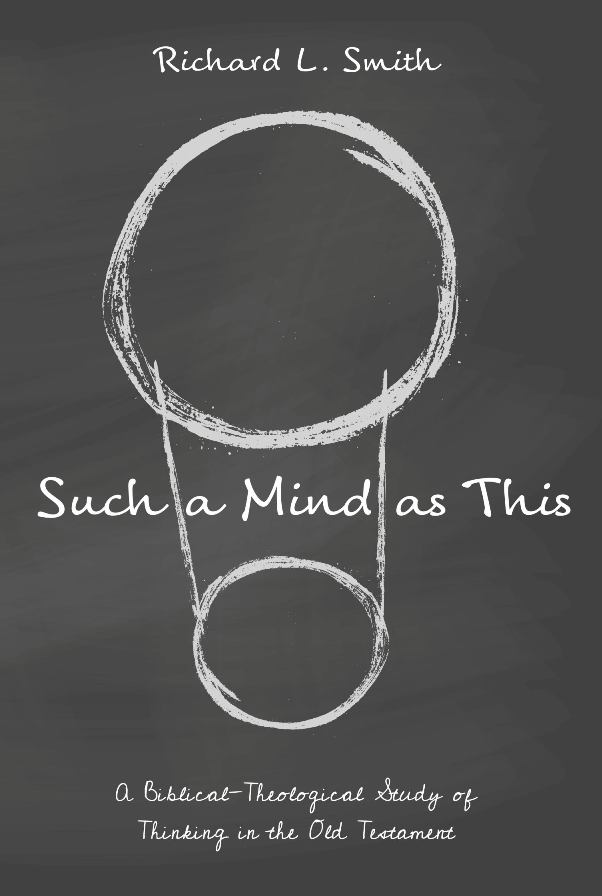
While conducting research for my book (Such a Mind as This), I ran across an intriguing statement by the French playwright Molière (1622–1673). His play “The Learned Ladies”  satirizes pseudo-scholars and their acolytes for their pretentious aspiration to glory and influence through knowledge acquisition. In this context, he stated, “A learned fool is more foolish than an ignorant one.”

In my book, I apply Molière’s aphorism to the mentality of Qohelet, the main speaker in Ecclesiastes. He was intelligent and learned. But his intellectual project was skewed and foolish. He grasped for illegitimate knowledge “under the sun.”[1]

Is it possible for learned evangelicals to be foolish? Absolutely. Let us consider how.

I argue that the fool of Psalm 14, who claims that God does not exist, represents the apex of noetic corruption in the Old Testament.[2] The fool is not a philosophical atheist, but a functional or willful non-believer. He is an epistemological rebel. He knows deep in his heart that God exists but operates as if God were irrelevant (unknowing, impotent, uncaring). The fool minimizes and marginalizes deity as a form of self-justification for doing evil.[3] This outlook is expressed several times in the Old Testament:

In the pride of his face the wicked does not seek him; all his thoughts are, “There is no God.” . . . He says in his heart, “God has forgotten, he has hidden his face, he will never see it.” (Ps 10:4, 11)

The fool says in his heart, “There is no God.” They are corrupt, they do abominable deeds; there is none who does good. (Ps 14:1)

How can God know? Is there knowledge in the Most High? (Ps 73:11)

The LORD does not see; the God of Jacob does not perceive. (Ps 94:7)

He will do nothing; no disaster will come upon us, nor shall we see sword or famine. (Jer 5:12)

The LORD will not do good, nor will he do ill. (Zeph 1:12)

Ethical maleficence rooted in divine marginalization is not something in which most Christian thinkers engage. However, we do slip into forms of intellectuality that are not in accord with biblical revelation and that minimize God’s dominion. One way this occurs is through an epistemic sacred – secular division.[4] This mental posture functions as if God’s reign does not extend to all human thinking, as if he were intellectually irrelevant. It is observable in the following practices:

Professors who do academic (secular) thinking from Monday to Saturday and sacred thinking on Sunday.

Devoting oneself to professional intellectual development while also exhibiting aspects of anti-intellectualism or illiteracy with reference to the Bible.[5]

Operating cognitively as if pluralism or relativism is valid and obvious truths.

Failing to recognize sin as an epistemological reality as it applies to personal cognition, as well as social thought.

Negating the importance of apologetics and cultural critique under the influence of tolerance and pluralism.

False neutrality―i.e., imagining that any fact, thought or experience can be properly understood apart from the existence of God, the Creator and Lord, and his revelation.

Theoretical naivete―not thinking about one’s discipline with reference to its fundamental assumptions or the biblical worldview.

Inconsistent intellectual piety―i.e., failure to apply intellectual virtues consistently to each day of the week and every sphere of knowledge.

Each of these compartmentalized ways of thinking minimize God’s lordship over the mind. Indeed, operating as if God is extraneous in any sphere of life, is folly. Such foolishness implies a negation of Jesus’s claims about himself (“I am the way, the truth, and the life”) and ignores the applicability of the Great Commandmen to every aspect of life : “Hear, O Israel: The Lord our God, the Lord is one. And you shall love the Lord your God with all your heart and with all your soul and with all your mind and with all your strength” (Mark 12:29–30).

On the other hand, John M. Frame describes a mental posture consistent with the biblical worldview. All human knowing, he says, is “servant knowledge” or “a knowledge about God as Lord and a knowledge that is subject to God as Lord.”[6]

Paul M. Gould explains how this works out in practice, providing guidelines for the would-be missional thinker: “Christian scholars ought to be, among other things, actively engaging the dominant plausibility structures embedded within culture, so that the gospel message can gain a fair hearing.” He adds, “We need Christian scholars to engage the underlying presuppositions of every discipline, correcting assumptions where needed and making connections that have hitherto gone unnoticed, to demonstrate the unity and elegance of the Christian worldview within the fragmented academy.”[7]

Christian thinkers should self-consciously flee folly. They ought to possess epistemic self-awareness. They should know where to draw the line regarding intellectual assimilation.[8] They must discern the difference between the common good and biblical distinctives. They must navigate epistemological relativism and ontological pluralism, carrying their solid biblical grounding into the world around them for God’s glory and mankind’s blessing.

[1] See my book chapter 5 concerning Qohelet and chapter 6 about ignorant foolishness.

[2] Paul cites Psalm 14:2–3 in Romans 3:11–12 indicating that noetic depravity is a central and universal aspect of the human condition. As no one obtains epistemic perfection in this life, no one escapes the influence of folly this side of eternity.

[3] As Dostoevsky noted, “If God does not exist, then everything is permitted.”

[4] Other ways include, for instance, laziness or the lack of curiosity about biblical knowledge.

[5] Christian scholars invest many years of study and thousands of dollars to gain an academic specialty. But how many hours and dollars do they invest in acquiring biblical wisdom? Paul M. Gould observes, “While experts within their own particular fields of study, Christian professors often possess a Sunday school level of education when it comes to matters theological and philosophical . . . and the result is a patchwork attempt to integrate one’s faith with one’s scholarly work and an inability to fit the pieces of one’s life into God’s larger story.” (The Outrageous Idea of a Missional Professor, 7)

[6] Frame, The Doctrine of the Knowledge of God, 40 (emphasis in original).

[7] Gould, “The Consequences of (Some) Ideas,” Cultural Encounters 8, no. 1, 124.

[8] See chapters 13–14 in my book.

“THE SCHOLAR’S PRAYER”

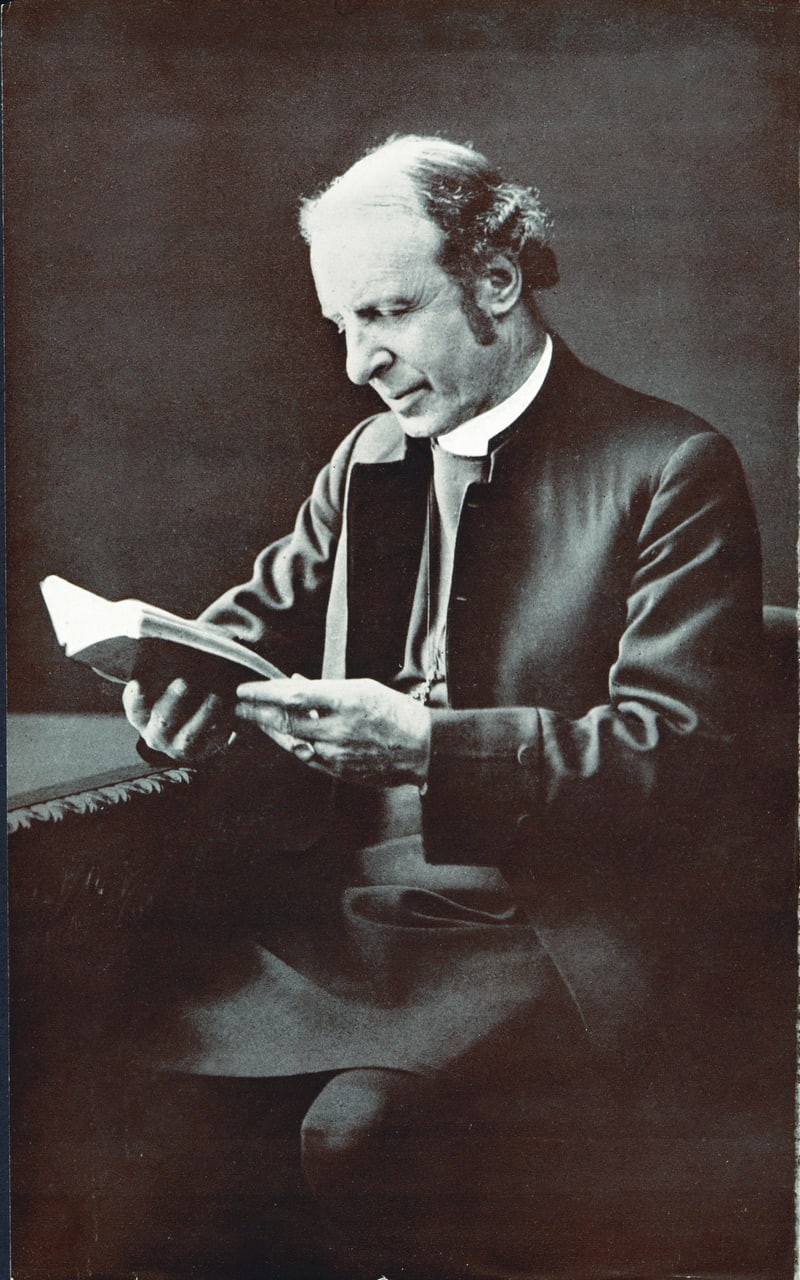
Handley Carr Glyn Moule (1841–1920) was the epitome of a pastor-scholar. He possessed a fervent evangelical piety. His father was an Anglican pastor. His mother modeled saintly prayer and “read to him from great books, instilling in him a lifelong quest for learning.” (See “Profile in Faith: Bishop Handley Moule.”)

Moule became a renowned academic at Cambridge University. He was known for his godly affection and was particularly sensitive to those struggling with doubt and despair. He was an ardent supporter of missions and hosted Hudson Tylor at the University.

He was appointed the first Head of Ridley Hall at Cambridge, established to preserve, and instill evangelical knowledge and piety. He wrote over sixty books, including biblical commentaries. He composed hymns and wrote two volumes of poetry.

In 1901, he was appointed the Bishop of Durham. He wrote the people of the Diocese:

I need and seek your prayers. Ask for me especially . . . a real effusion in me of that grace of the Spirit whereby Christ dwells in the heart by faith; a strength and wisdom not my own for my pastorate, and for the preaching of Christ Jesus the Lord; and a will wholly given over for labour and service at our Master’s feet.

In May 1920, he preached before the King and Queen at Windsor Castle. He died shortly after.

I am particularly taken with his meditation about scholarship. He expresses eloquently the mindset of one who desires to love God with the mind (Deut 6:4‒5)―as an academic:

Lord and Savior, true and kind,
Be the Master of my mind;
Bless, and guide, and strengthen still
All my powers of thought and will.

While I ply the scholar’s task,
Jesus Christ, be near, I ask;
Help the memory, clear the brain,
Knowledge still to seek and gain.

Here I train for life’s swift race;
Let me do it in Thy grace;
Here I arm me for life’s fight;
Let me do it in Thy might.

Thou hast made me mind and soul;
I for Thee would use the whole;
Thou hast died that I might live;
All my powers to Thee I give.

Striving, thinking, learning, still,
Let me follow thus Thy will,
Till my whole glad nature be
Trained for duty and for Thee.

TEN BOOKS THAT CHANGED MY LIFE (PT. 3)

The Doctrine Of God by Herman Bavinck

I encountered Bavinck in the spring semester of my first year at seminary (January 1990). As the saying goes, I was “blown away”! This is the Table of Contents from this book: God’s Incomprehensibility, God’s Knowability, God’s Names, God’s Incommunicable Attributes, God’s Communicable Attributes, The Holy Trinity, and God’s Counsel. Bavinck taught polemical theology, that is, he compared and contrasted other worldviews with the biblical understanding of deity. He also provided much historical information about the development of the doctrine of God. This statement was especially intriguing:

The Bible never attempts to prove the existence of God but assumes this; and it presupposes all along that man has an ineradicable idea of that existence, and that he has a certain knowledge of the being of God: an idea and a knowledge which are not the result of man’s own study and research, but of the fact that God on his part has revealed himself both in an ordinary and in an extraordinary manner, has manifested himself in nature and in history, in prophecy and miracle. Accordingly, the knowledge of God is never presented as a doubtful manner.

The Proslogion by Anselm

Anselm (died in 1109) was a monk in England who wrote a famous demonstration of God’s existence (Proslogion). Anselm assumed that it is possible for faith to gain understanding, as God illumines the mind. He prayed, “Well then, Lord, You who give understanding to faith, grant me that I may understand, as much as You see fit, that You exist as we believe You to be.” Later on in his document, he testified with joy, “I give thanks . . . since what I believed before through Your free gift I now understand through Your illumination . . .” Anselm taught me the necessity and beauty of intellectual piety in all thinking, especially about God. Here is how he prayed about his intellectual project:

What shall he do, O most exalted Lord? What shall Your servant do, anguished out of love for You and cast far away from Your face? . . . Indeed, I was made for seeing You; but not yet have I done that for which I was made. O the unhappy fate of man when he lost that for which he was made! O that hard and ominous fall!

Teach me to seek You, and reveal Yourself to me as I seek; for unless You teach [me] I cannot seek You, and unless You reveal Yourself I cannot find You.

O Lord, I do not attempt to gain access to Your loftiness, because I do not at all consider my intellect to be equal to this [task]. But I yearn to understand some measure of Your truth, which my heart believes and loves. For I do not seek to understand in order to believe, but I believe in order to understand.

Heaven―A World Of Love by Jonathan Edwards

In 1997, my first wife, Karen, was diagnosed with cancer. It was a terrible shock and disruption in every way. Later, in 2002, she died. During her time of illness, I thought a lot about heaven. I studied the Bible and read several books. In the last chapter of Charity and Its Fruits by Edwards I found a beautiful description of heaven called “Heaven―A World of Love.” The heaven he describes is worth dying for. Here is an excerpt where he links heaven and Eden with everlasting love:

And all this in the garden of God―in the paradise of love, where everything is filled with love, and everything conspires to promote and kindle it, and keep up its flame, and nothing ever interrupts it, but everything has been fitted by an all-wise God for its full enjoyment under the greatest advantages forever!

Future Grace by John Piper

For my birthday in 1997, Karen gave me this book. This was shortly before she was diagnosed. She wrote on the cover, “But he gives more grace” from James 4:6. Piper writes, “At the heart of this book is the conviction that that the promises of future grace are the keys to Christ-like Christian living.” That reality―and experience― became very real as we soon confronted illness, decline, and death. It was also sustaining knowledge in the twenty years since, as I have relocated to another culture and embraced new aspirations. This is a meaningful quote from book:

Future faith in grace produces love not only by what it pushes of out the heart, but also by the strong desires it brings to the heart. Faith has an insatiable appetite for experiencing as much of God’s grace as possible.


A Positive Review of My Book

Bill Edgar was my mentor at Westminster Theological Seminary

It has often been remarked that some of the best epistemologists (thinkers about thinking) are not particularly grounded in the text of Scripture. If that is true then you need to read Richard Smith’s excellent study on knowing in the Old Testament to rectify this failing. What may sound to some like an academic diversion turns out to be a first-rate examination of where human knowledge was meant to originate and where it is now. Why is this important? Because we have lost the sense that our understanding matters in order to navigate life. Many people today are either hostile to thinking or (worse) indifferent to it.

In a now famous statement, Mark Noll’s book, The Scandal of the Evangelical Mind, opens with the declaration, “The scandal of the evangelical mind is that there is not much of an evangelical mind.” Noll has walked back this devastating indictment a bit, partly because evangelicals have begun to respond to his accusation and partly because Noll found certain pockets where evangelicals have made a difference. Had he been able to read Smith’s book he would have celebrated a new awareness of the epistemological self-consciousness so greatly needed.

This book has many virtues. The first is that it links knowledge to piety. Knowledge should never be severed from it spiritual roots both for weal and for woe. To prove this Smith goes beyond quoting Proverbs 9:10, “the fear of the Lord is the beginning of wisdom: and the knowledge of the Holy One is understanding,” fundamental as is this truth. But he delves into specific episodes in redemptive history, culling from them the admonition to know, and to know aright. Accordingly, the book begins with an extensive look at how unfallen man would use his mind to explore the wonders of God’s world. It then moves on to describe how sin has affected knowledge adversely. Particularly engaging is he examination of troubled souls such as Qoheleth and Job, as well as influential figures such as Daniel. Finally, Smith focusses on Jesus Christ and the age of redemption without leaving off the Old Testament emphasis.

The voices of Cornelius Van Til, John Frame and others in the Reformed tradition echo throughout. But they are embedded in Bible study. Side refences abound with great quotes, confirming Smith’s insights.

Perhaps one of its unintended consequences is to re-introduce us to the riches of events and persons throughout redemptive history. This could become a devotional book exposing us to the treasure hidden in the biblical story. It is not a book to read rapidly from cover to cover. It is a book to be savored. Like a good wine it should not be gulped but tasted judiciously.

A unique book that will be read profitably for many generations.

William Edgar
Professor of Apologetics
Westminster Theological Seminary
Philadelphia, USA

TEN BOOKS THAT CHANGED MY LIFE (PT. 2)

The God Who Is There by Francis Schaeffer

I first read Schaeffer when I went back to university in 1981 to finish my Bachelor’s degree. Before reading his book, I never thought much about the intellectual plausibility of the biblical worldview. Schaeffer showed how Christianity made sense and he modeled “intellectual hospitality” with those who did not believe. He demonstrated how to interpret unbelief and how to communicate with unbelievers. When I went to seminary in 1990, I began to encounter more and more thinkers who had been discipled by Schaeffer. He also prepared me theoretically for the study of apologetics at seminary by utilizing the concepts of presupposition and worldview. This statement was helpful:

Non-Christian presuppositions [fundamental beliefs] simply do not fit into what God has made, including what man is. This being so, every man is a place of tension. Man cannot make is own universe and then live in . . . . Thus, when you face twentieth-century man, whether he is brilliant or an ordinary man of the street, a man of the university or a man of the docks, you are facing a man in tension; and it is this tension which works on your behalf as you speak to him . . . . A man may try to bury the tension and you may have to help him find it, but somewhere there is a point of inconsistency. He stands in a position he cannot pursue to the end; and this is not just an intellectual concept of tension, it is what is wrapped up in what he is as a man.

Knowing God by J. I. Packer

This book was my first exposure to systematic theology―specifically Reformed theology―and Packer expressed it in a very pastoral manner. I learned about God’s nature, his wrath and forgiveness, his word and scripture, his devotion to us, justification and sanctification, and the path of discipleship. I remember saying at this time, “I discovered that I could use my brain and be a Christian!” Reading Knowing God was a revival. When I was considering going to seminary in the late 1980’s (and leaving the American Dream behind), I read this counsel from Packer in a section called “The Adequacy of God”:

We know what kind of life Christ calls us to . . . . But do we live it? Well, look at the churches. Observe the shortage of ministers and missionaries, especially men; the luxury goods in Christian homes; the fundraising problems of Christian societies; the readiness of Christians in all walks of life to grumble about their salaries; the lack of concern for the old and lonely, or of anyone outside the circle of ‘sound believers’ . . . . Why, compared to them [Christians of the New Testament] do we appear as no more than half-way Christians? . . . One reason it seems is that in our heart of hearts we are afraid of the consequences of going the whole way into the Christian life.

The Institutes Of Christian Religion Vol. 1 by John Calvin

I discovered Calvin in my first class at seminary―the beginning of a five-year renewal. I wrote on the inside cover of this book “January 14, 1990.” The Introduction says that the Institutes “holds a place in the short list of books that have notably affected the course of history, molding the beliefs and behavior of generations of mankind.” This is clearly true, including me. When I read Calvin and received instruction about his system, I saw how he labored to love God with all his heart, soul, mind, and strength. Volume One concerns “The Knowledge of God, the Creator.” Here are a few insights that I highlighted years ago and which still influence me:

It is certain that a man never achieves a clear knowledge of himself unless he has first looked upon God’s face, and then descends from contemplating him to scrutinize himself.

And because nothing appears within or around us that has not been contaminated by a great immorality, what is a little less vile pleases us as a thing most pure―so long as we confine our minds within the limits of human corruption.

Our mind cannot apprehend God without rendering some honor to him . . . unless we are also persuaded that he is the fountain of every good, and that we must seek nothing elsewhere than in him.