A Call and a Command

I have been thinking for some time about the universal command to love God with the mind and the specific calling to intellectual achievement (in whatever field).

Some Christians and especially the intellectual leaders of the church are called to higher levels of knowledge and wisdom. In fact, Christian thought leaders in every field should understand deeply the biblical worldview and how to engage cultures in evangelism, apologetics, and for the common good.

On the other hand, everyone who is a Christian receives a command to love God with the mind (Deut 6:4-5; Mark 12:30). How this works out in practice depends on many variables, including access to learning formats, economic resources, and aptitude.

In neither case, of call or command, is anti-intellectualism or biblical ignorance a God-honoring option. Theological illiteracy is also spiritually dangerous.

In its broader context, both the specialized call to the life of the mind and general command to intellectual piety are part of a wholistic spirituality that loves God with all the mind, soul, and strength, and also loves their neighbor (Mark 12:30-31).


Guest Blog by Alejandro Toja Oviedo

Artificial intelligence, teaching and intellectual training: a contribution to the debate on AI in Johann Neem’s “Learning to Grapple with the World.”

This article is a response to “Learning to Grapple with the World,” by Johann Neem, recently published as part of the series “What does every university and college student need to learn?”. In it, Neem lucidly analyzes the transformations that higher education is going through, pointing out with concern the growing disinterest in reading, the pressure for performance, and the use of artificial intelligence as ways to avoid intellectual effort. To provide context, here is Neem’s opening paragraph:

It is a difficult time to be a college professor, just as it is to be a student. For various complicated reasons, students are coming to campus less prepared and less willing to engage in the kind of work—reading and writing particularly—that has long been required to become college-educated. Moreover, thanks to generative AI, students can now produce workable papers without doing any of the thinking once required. This means that students are neither capable nor needing to engage deeply with subject matter. They can avoid being educated and still get a degree.

Based on his proposal, and from a perspective situated in the Argentine and Latin American context, I would like to broaden the conversation by considering the impact of these dynamics in our classrooms and underlining the need for an ethical and pedagogical response that recovers the formative meaning of education.

The article exposes a reality that has become evident at all levels of the formal education system, particularly in the last two years in Argentina, although in greater depth in the United States and Europe. It’s a fact: many students use artificial intelligence (AI) to filter texts, summarize them at key points, extract hypotheses and conclusions, and even generate new ideas from them. In many cases, they present these results without additional personal evaluation and still get a passing grade. This phenomenon is not only possible, but it is already happening.

However, this panorama also highlights certain shortcomings in our teaching practices. As teachers, we sometimes avoid taking responsibility. Are oral and written evaluations designed to evaluate the real understanding of the work presented? Is a report requested that accounts for the student’s research process? Do universities have AI-based tools to detect fraud or identify content generated by other artificial intelligences? These technologies already exist, and they could complement strategies that foster richer interaction between teachers and students—not only as control mechanisms, but as forms of genuine accompaniment in learning and knowledge production.

This problem is also linked to two urgent issues within the academic field of the humanities and social sciences. Although in disciplines such as engineering or medicine, full automation is still unfeasible. That there are significant difficulties related to AI and the learning process in general are already beginning to be observed.

First, there is a marked lack of interest in reading. Although many students are drawn to specific topics in their education, they rarely develop systematic reading habits. The causes are multiple: distractions typical of the digital environment, lack of commitment, difficulties in reading comprehension—a growing problem in Argentine secondary education—and socioeconomic conditioning that directly affects academic performance.

Secondly, the demotivation of the teaching staff aggravates this scenario. Factors such as low wages, work overload—expressed in massive classes and the correction of multiple papers and essays—and the lack of specific training in new technologies, undoubtedly affect the quality of teaching. As a teacher and student, I recognize that this tension is clearly perceived from both sides of the classroom.

However, AI should not be seen solely as a threat. It can also become a valuable tool for enriching learning. Its responsible use can contribute a lot, from organizing ideas and grammatical correction, to searching for information in databases and digital libraries, offering more accurate results than conventional search engines. It can even facilitate the comparison between divergent ideas and the elaboration of creative syntheses that strengthen academic production.

Of course, like all technology, AI is not exempt from errors or possible misuses. It may omit relevant data or give misleading answers, so its implementation in the classroom must be guided by well-defined ethical and pedagogical criteria.

Faced with this reality, I consider it urgent to establish a specific academic deontology for the use of AI in higher education. This involves training students in both ethics and the design of prompts (indications and commands given to AI) that allow them to complement their training without replacing critical thinking or deep reading. It also requires establishing clear rules to prevent academic fraud and strengthen the relationship between teachers and students, ensuring rigorous accompaniment, especially in the first years of all careers. To this end, the participation of specialists in each discipline is key.

Also, we cannot lose sight of the impact that socioeconomic inequality has on access to these tools. While there are free versions of AI, its features are limited compared to paid options, which could open up new gaps in access to education and academic opportunities.

Finally, from the beginning of the Industrial Revolution until today, humanity has managed to adapt to technological advances, overcoming in many cases the resistance of technophobic movements. A large part of this capacity for these advances and the adaptation to them are due to the scientific, philosophical, political, cultural and educational legacy of the Reformation. In fact, the immense legacy of the main houses of higher learning is threatened, not only by persistent socio-economic inequalities, as I mentioned earlier, but also by the abandonment of a Christian ethic and worldview, which were for centuries the root and engine of the Western educational project.

Given the current pace of change is faster than ever, this forces us to urgently rethink how we will adapt to this transformation without sacrificing the quality of knowledge or equity in access to education—and challenges us, as Christians, to be a light in a Western culture that has left its Christian roots behind.

Alejandro is the Operations Coordinator for our Kuyper Center for Christian Studies. He has a degree in history and teaches in a high school.


“Oh, The Depth of The Riches and Wisdom and Knowledge of God!”

This is a reprint and revision of a blog posted on April 3, 2012.

Paul expressed this proclamation in Romans 11:33, knowing that the nation of Israel was being undermined by pagans. He acknowledged that God hardened Israel’s hearts due to disobedience (Rom 9–11; Ps 81:11–12). Earlier he exclaimed, “I have great sorrow and unceasing anguish in my heart. For I could wish that I myself were accursed and cut off from Christ for the sake of my brothers, my kinsmen according to the flesh” (9:2–3).

Why could Paul praise God’s great wisdom, knowing the terrible fate that befell his nation?

Because he realized that only through Israel’s failure to acknowledge their Messiah would the gospel go to the ends of the earth. Clearly, Paul’s worldview was broader and deeper than his nationalism or his Jewish heritage.

Who could praise God for this unexpected wisdom at that time? Certainly, only those more committed to the kingdom of God than lesser priorities, like culture and tradition and personal welfare.

Imagine our age and our social-economic context today. Could we confess God’s great wisdom if all that we are accustomed to were reversed or even destroyed―for the sake of his kingdom? What if the gospel advanced through the suffering of our nation or the loss of its power and prosperity?

For example, biblical scholars teach that perhaps the greatest threat to the gospel and church today is consumerism. Can you imagine a civilization without consumerism? What would happen to us, our lifestyles, and our churches if our economic system ceased to exist as we know it?

Or imagine an authoritarian ideology that transformed our country. What would happen to the church if the state demanded political fealty over gospel adherence? What would we choose?

What if natural disaster (solar flare, earthquake, disease) or manmade conflagration (terrorist attack, asymmetrical warfare, or regional nuclear war) destroyed our economic or communications infrastructure?

What if God permitted this to happen to promote the gospel and purify the church? Would we be able to declare, “Oh, the depth of the riches and wisdom and knowledge of God”?

So, the question for the Christian is, what are our priorities?

Is it a certain lifestyle?

A particular economic or political system?

A specific social or cultural preference: economic, racial, ethnic or religious?

What if God imposed this judgment on our nation, as he did to ancient Israel: “But my people did not listen to my voice; Israel would not submit to me.  So I gave them over to their stubborn hearts, to follow their own counsels” (Ps 81:11–12)? What if, in God’s wisdom and for his glory, disaster purifies the church and extends the kingdom of God?

Is our biblical theology deep and broad enough for whatever happens? Could you and I acknowledge God’s wisdom and demonstrate his love, even if our world were changed radically?

According to the Bible, God has higher priorities and long-term goals that might be different than our comfort, political-economic preferences, advanced technology, or vaunted civilization.

“Oh, the depth of the riches and wisdom and knowledge of God!”

Five Introductory Books About Apologetics

When I am asked about learning apologetics, I often refer to people five basic texts. Below I describe briefly each one for your consideration. I also suggest that you read them in the order presented.

Every Thought Captive by Richard L. Pratt (142 pages)
The author provides a clear and simple biblical-theological overview for doing apologetics. Chapters 9–13 concern tactical guidance for defending the faith. The “Apologetic Parable” (a hypothetical dialogue) representing evidentialist, rationalist, and presuppositional methodologies is worth the price of the book.

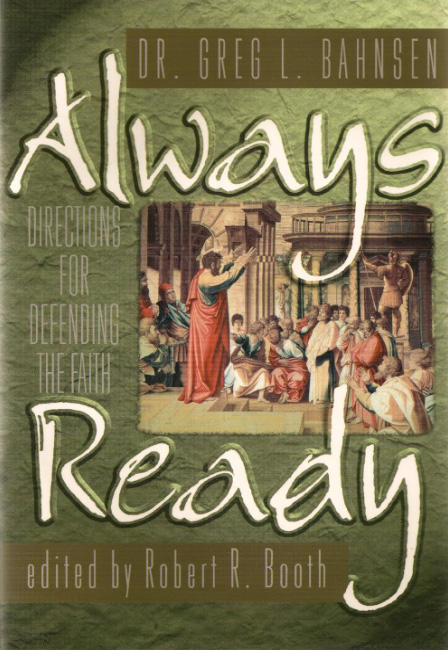
Always Ready by Greg L. Bahnsen (289 pages)
The book contains thirty-five chapters organized under five headings: The Lordship of Christ in the Realm of Knowledge, The Conditions Necessary for the Apologetic Task, How to Defend the Faith, The Conditions Necessary for Apologetic Success, and Answers to Apologetic Challenges. There is also a Biblical Exposition of Acts 17.

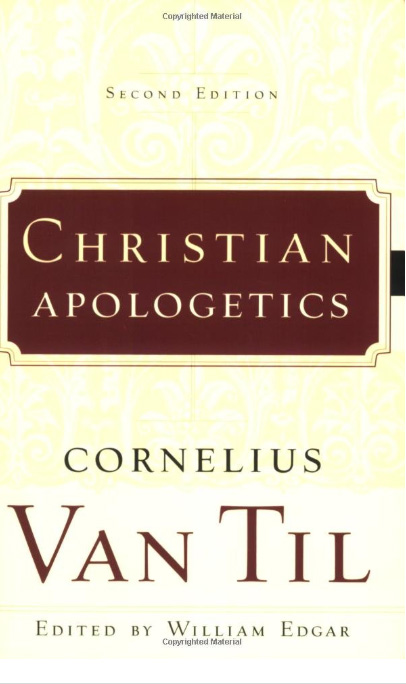
Christian Apologetics by Cornelius Van Til (206 pages)
This is the classic text by Van Til and with an excellent Introduction by my mentor at Westminster Theological Seminar, William Edgar. The chapters describe principles of Van Til’s presuppositional (or transcendental) method, including The System of Christian Truth, The Christian Philosophy of Life, The Point of Contact, The Problem of Method, and Authority and Reason. This book is highly recommended.

Covenantal Apologetics by K. Scott Oliphint (277 pages)
The author is a retired professor of apologetics at Westminster Theological Seminary. The Forward is provided by William Edgar. The chapters are: Always Ready, Set Christ Apart as Lord, Proof to All Men, We Persuade Others, We Destroy Arguments, Walk in Wisdom Towards Outsiders, and You Are Very Religious. This text features reflections about apologetics based on passages in the Bible.

Tactics: A Guide to Effectively Discussing Your Christian Convictions by Gregory Koukl (144 pages)
This is a study with exercises arranged in six sections. It is best utilized in a group, where the rhetorical techniques can be practiced and refined.


A Christian Studies Center in Buenos Aires!

Many of you know that I have lived in Buenos Aires―for fifteen years. For about ten years, informally and now formally, friends and I have functioned as a learning community. We are discovering how to love God with our minds and to engage the culture with the biblical worldview.

These are the vision and mission of the Centro de Estudios Cristianos Kuyper:

Vision: We want to be a community that cultivates thinking about all of reality in light of the biblical worldview and exerts a redemptive and missional influence in the university, the public sphere, and the church.

Mission: We provide a space for community dialogue and learning based on the biblical worldview, offering resources, programs and services to students, academics, leaders, and anyone who wants to participate, with a local and regional focus.

Two members of our leadership team commented:

After years of reflection on how to love God with our minds and how to encourage the local church to do the same, our first conferences at the Kuyper Study Center have given us a very pleasant surprise: the church in Argentina has begun to awaken. Many have expressed with enthusiasm that this is the place they needed to bring their doubts and ideas. (Micaela Ozores)

We perceive a need among Christians associated with the university, such as academics and students, for a study center … where one can learn and openly debate topics that are rarely discussed in local churches or in culture in general. This Center has significant potential in formative, apologetic and evangelistic terms in the context and history of our country. (Alejandro Toja)

We invite you to learn more about us. If you read Spanish, check out our website. Read our recent newsletter in English. To learn about our namesake,  Abraham Kuyper, read this short document.

Please share this blog with your friends!

My email address is comenius1251@gmail.com


JESUS’ INTELLECTUAL PROFILE

The New Testament scholar, Kenneth Bailey, once remarked quite honestly, “I discovered that I had been unconsciously trained to admire everything about Jesus except his intellectual astuteness.”

I suspect that many Christians view Jesus in much the same way. Of course, he is our savior, protector, and provider. But he is not often seen as a brilliant thinker or intellectual role model. And so, we do not often connect the dots between Jesus’ mental profile and our obligation to love God with the mind, for which he is the paradigm.

Remember that, when Jesus was asked, “Which commandment is the most important of all?,” he cited the famous Shema (Deut 6:4–5), affirming the creedal nucleus and core spirituality of the Old Testament: “Hear, O Israel: The Lord our God, the Lord is one. And you shall love the Lord your God with all your heart and with all your soul and with all your mind and with all your strength” (Mark 12:28–30).

Jesus loved God with all his mind. We should do likewise and learn to love God with all our minds.

Below I outline briefly various themes regarding Jesus’ intellectual profile, in accord with the Shema. This is very important and quite relevant because we are commissioned to imitate his thought life, though finite and fallen. And we should train disciples to do the same.

First, Jesus demonstrated the supreme importance of listening to God alone. For this reason, he prayed often, especially in moments of decision. He confessed, “Truly, truly, I say to you, the Son can do nothing of his own accord, but only what he sees the Father doing” (John 5:19).

Second, Jesus acknowledged the primacy of scripture. When he was tempted by the devil, he cited passages from Deuteronomy. When he was dying on the cross, he referred to the Psalms. He continually cited the Old Testament and reasoned from its precepts. To put it another way, he presupposed the biblical worldview, and he reasoned covenantally. Everything Jesus thought, spoke, desired, and performed was conditioned by God’s Law.

Third, Jesus modeled the fear of God intellectually and ethically. He embraced Proverbs 1:7a, “The fear of the Lord is the beginning of knowledge.” He embodied Proverbs 3:5–7: “Trust in the Lord with all your heart, and do not lean on your own understanding. In all your ways acknowledge him, and he will make straight your paths. Be not wise in your own eyes; fear the Lord, and turn away from evil.”

Fourth, Jesus was supremely wise. He knew what was truly important and what to do about it in the most fruitful manner. He could not be distracted or manipulated by folly. He could not be deterred from his Father’s mission to pursue a fool’s errand.

Fifth, Jesus was supremely knowledgeable. Evidence indicates that he spoke Aramaic and Hebrew. He likely communicated, as well, in Greek and Latin. He could read, as most scribes could. He was well familiar with the ethnic and religious distinctives of Palestine. He possessed a thorough knowledge of Jewish history and scripture, as well as familiarity with the literature of the Second Temple period. He manifested keen situational awareness, and astute theological reasoning.

Sixth, Jesus knew how to communicate with whomever he interacted with. He understood how to keep every interchange on point, how to refute and critique false reasoning, and how to guide each seeker towards the truth. In other words, he thoroughly comprehended human depravity and the intellectual impact of sin.

Seventh, Jesus’ knowing was historically situated. He understood that culture, revelation, sin, and the supernatural impact how and what we think in all its various forms. He discerned the antithetical mindset of the devil and his dominion. He perceived the twisted nature of sinful ideology and oppressive institutions. He recognized the battle of ideas and imagination.

Eighth, Jesus’ knowing was eschatologically conditioned. He defined his earthy existence in terms of God’s redemptive plan from creation, through Israel, to restoration. He knew exactly where he came from, where he was in first century Palestine (with its social, religious, and political complexity), and to where (or to whom) he would return.

Nineth, Jesus’ thinking was ontologically situated. He thought in communion with the Father and Spirit, which is to say his knowledge was Trinitarian. After he died and when he returned to the Father, he sent the divine pedagogue, the Holy Spirit, to guide us until his reappearance, which indicates the significance of the mind from the Trinity’s point of view.

In short, Jesus loved God with all his mind, despite the chaotic, confusing, and demonic context he which he ministered. He embodied the wisdom of the Sons of Issachar, “who had understanding of the times, to know what Israel ought to do” (1 Chron 12:32). In accordance with the Shema, he manifested right thinking, pious motivation, and wise application.

We should do likewise and learn to love God with all our minds.

Gospel Intellectuality

People often refer to the “simple gospel,” as if the Synoptics and John are clear and easily understood. Others, however, assert that they are overly simplistic, meaning that they overlook deeper truths and imply ready-made solutions. The gospels, they say, claim too much or propose answers to questions that are no longer relevant. Their reasoning and assumptions reflect a worldview that is superseded today.

I argue, on the other hand, that the gospels are neither simple nor simplistic. They demonstrate an intellectuality (all the ways that we think) that is multi-faceted and profound. Intellectually, the worldview depicted in the gospels is just as real today.

The gospels presume a high degree of Old Testament literacy. First-time listeners and readers were expected to know the Old Testament worldview and to reason from the Old Testament. According to Jesus, “every scribe who has been trained for the kingdom of heaven” (Matt 13:52a) perceives the suffering Messiah depicted in Israel’s scripture and listens to his teaching (Luke 24:25–27). In this way, a true disciple “brings out of his treasure what is new and what is old” (Matt 13:52b).

The gospels utilize argumentation and refutation. Ideas―individual, of groups, and ideologies―were subject to Jesus’ withering critique. Erroneous theological constructs and practices were rejected. Willful ignorance and folly were denounced (John 3:10; Matt 22:29). These encounters show that Jesus was obviously brilliant, but his listeners were often foolish.

Jesus should be considered a genius, not merely because a vast number of people today claim to follow him but also because of the cleverness and wisdom of his teaching. The teaching ascribed to him combines impressive factual knowledge with even more impressive depth of insight, coherence, and simplicity. –Peter J. Williams

Jesus interacted with the major theological perspectives of his time. He dialogued with sophisticated intellectuals vested with power and privilege, poised to oppose him. He also engaged the common folk, male and female, Jew and foreigner. Pedagogically, he used various rhetorical devices to probe the minds of interlocutors: questions, puzzles, stories, and assertions. He utilized common logic, story-telling, and scribal reasoning.

In the gospels, therefore, the mind plays a critical role. Why? Because Jesus was the greatest thinker who ever lived. In the gospels, learning, reasoning, and understanding were paramount. Those who sought discernment were revered. Knowledge acquisition and wisdom attained were prized by Jesus. And those at that time, and now,  attempt to follow his example and imitate his mindset, though finite and fallen thinkers.

The gospels chronicle the intellectual journeys of those seeking understanding, but also those seeking to avoid it. Most of the people who heard the Lord’s teaching did not perceive the message or his significance. They could not “connect the dots” between Old Testament testimony, current messianic expectations, and Jesus’ proclamation. His message did not appear simple or within grasp for many; but rather opaque or even farcical. As a result, confusion, denial, and offense were the typical responses. Though the gospels seek to alleviate this knowledge deficit, as John wrote, “The world did not know him. He came to his own, and his own people did not receive him” (1:10b–11).

According to the Synoptics and John, therefore, our intellectual matrix and the intellectual profiles of belief and unbelief have not changed since the advent of Jesus Christ. The intellectuality of the gospels is just as relevant now as it was in the past. Would-be followers of Jesus Christ today must still learn to “love God with all their mind” (Mark 12:30).

“The kettle will get hotter” (part 2)

The following extract is from my book Such a Mind as This (xviii-xix)

 This story [referring to the previous blog]  is obviously a fantasy, but it resembles the devil’s intellectual profile provided in the Scriptures. Satan is an incisive thinker and su­premely intelligent. He carefully plans and ponders his every move, like a champion chess player. He thinks strategically, both short- and long-term. He considers every contingency and countermove. He is a master teacher, grooming his demonic horde with a fiendish mindset so that they learn his ways and mimic his priorities. Together they execute his plan for the world under his guidance.

In addition, the devilish agenda the story imagines is in accord with the warnings of Scripture. Tactically, a long-term plan that renders be­lievers stupid and irrelevant is brilliant, from the devil’s point of view. He realigns our thinking with folly and wickedness. He spouts data that misinform and manipulate. He fills our minds with trivia and distraction. He wants us to ignore, misunderstand, and misapply God’s revelation, on both the individual and social levels. He skews our sense of identity as God’s image. He associates our epistemological stewardship with dysto­pian ends.

Satan’s program uses every conceptual machination available against humanity, including syncretism, disorientation, and disinforma­tion. It undermines the intellectual plausibility and existential credibility of biblical faith. It deconstructs the Scriptures. It redefines spirituality to minimize the mind and promotes secularism to delegitimize religion. Intellectual disloyalty, anti-intellectualism, and rank ignorance are its weapons of choice. But above all, the demonic realm strives to still God’s voice so that people will not and cannot hear.

In the Old Testament, the devil seemingly plays a relatively small role. (We need the New Testament to fill out his true epistemic profile.) His presence is often implicit. He shows up, however, at pivotal episte­mological moments. In Genesis 3, he queried Eve seditiously, “Did God actually say?” In Job 1, he insinuated with incredulity, “Does Job fear God for no reason?” In Daniel 10, he hindered the acquisition of knowledge concerning the meaning of prophecy.

The post-edenic, epistemological milieu is very complicated and enigmatic thanks to the influence of sin and Satan. The mental universe is populated by many voices, good and malevolent. There are competing pedagogues, divergent epistemological agendas, and flawed participants. The whole Old Testament is a battlefield between the human mind and God’s revelation. And lurking in the chronological and epistemological background is the diabolical dissembler who questions the veracity of God’s word. The devil plays a role in how and what we think. Without question, Christians require discernment and wisdom to navigate the “present evil age” (Gal 1:4; see also Eph 2:1–3).

“The kettle will get hotter” (part 1)

The following extract is from my book Such a Mind as This (xv-xvii)

Many years ago, the demons held a very important summit meeting. The topic of discussion was how to marginalize the church and minimize its influence so that Satan’s agenda could advance without hindrance.

The group leader remarked, “The Master wants us to generate some new ideas about how to frustrate Jesus’ agenda. In the past, we initiated many worthwhile projects that had both short- and long-term benefits. And the Master was pleased. During the earliest days of what they call the church, we sowed division and persecution. We implanted lots of mischief, what they call heresies, to distract and confuse them. We un­dermined their so-called gospel by endless combinations like Jesus and Judaism, Jesus and philosophies, and Jesus and other religions. We can justifiably congratulate ourselves, but not for long, for there is much more to accomplish.” The spirits all declared, “We’re ready!”

The leader continued, “But now, the Master wants a nuclear option. We’re looking for a way to stunt the growth of the enemy’s sect once and for all! The floor is open. Give me something really promising to tell the Master. And remember—he’s not patient and doesn’t tolerate failure!”

“I know! I know!” exclaimed an enthusiastic demon. “Let’s greatly in­crease our efforts to corrupt them from within with greed and hypocrisy.”

The leader responded sardonically, “We’re doing that already. Give me something new.”

Another spirit commented, “Why don’t we try an apocalypse of some kind and end this charade quickly? How about a plague, world war, or natural disaster? The few who survive, we can pick off one by one at our leisure.”

The leader sighed impatiently, “Yes, of course. But the Master in his supreme wisdom determined that we need something else, a new sub­versive paradigm. So, as I said, give me something different! Inspire me!”

Just then, the leader spotted a new member sitting quietly off to the side. “You, over there! Speak up! Do you have anything useful to contribute?”

The newbie replied meekly, “Um, well, yes, sir. Maybe.”

“Enlighten us, then, before I throw you out of here!”

“Well, sir,” he stated barely above a whisper, “I have listened care­fully to all the excellent ideas of these esteemed colleagues, but I propose a new paradigm, as you requested.”

“Hurry up!” demanded the leader.

“We’ve not been able to completely eradicate the enemy’s cabal, as you said so eloquently. I suggest, therefore, that we allow a small, Chris­tian sect to survive, but on our terms and our timetable, rather than try­ing again and again to eliminate them.”

The leader said, “That is indeed a radical departure from our strate­gic plan. Go on.”

“Thank you, sir. My plan consists of two parts. First, we’ll lead them to redefine spirituality. No longer will they believe that their so-called gospel—what we know to be heresy—applies to all of life. That must stop! They must come to believe that spirituality is private and subjective. It will be something they feel, but never anything they think. We can teach them that spirituality exists to promote self-fulfillment. We must train them, also, to think that their so-called salvation concerns only their souls, so that their gospel has nothing to do with the world they live in.”

“Interesting,” commented the leader, growing more intrigued.

“Part two consists of injecting dualism in their thought and conduct. We should introduce the concept of the sacred and secular dimensions. Since their new spirituality will be egoistic, the church will progressively neglect all exterior dimensions, such as society and ideas, because these are secular. And they’ll come to view Sunday as religious, but Monday through Saturday as secular. As a result, slowly, they’ll develop two modes of thinking and behaving: one set for spiritual times and actions, the other set for secular times and actions.”

The leader leaped to his feet. “Now I’m getting interested!”

“Because of the sacred–secular divide, we’ll train them to think only on Monday through Saturday—in the secular realm. A few of them might make a positive impact on society, but no one will associate their spirituality with their ideas, if they generate any ideas at all. We can even train them to focus on how and when thinking, and never on why or what thinking.”

The newbie let his pause hang in the air for a moment and then added, “In other words, sir, we’ll make them stupid and irrelevant! We’ll let them have just enough religion to pacify them. And when the End comes, we’ll eliminate them easily.”

“Awesome!” declared the leader.

“Furthermore, we will erode confidence in their book of lies, what they call ‘scripture.’ We will undermine its credibility and its false claims so that it will become less and less plausible. Over time, the infamous sect will lose its intellectual foundation and its members will become far less discerning. In this way, they will learn not to listen to the great impostor Jesus anymore.”

Every demon in the room strained forward, hanging on his every word.

“And meanwhile, practically speaking, they’ll cede the world to us! We’ll do the thinking! In fact, we’ll make them afraid to think! We’ll implement our agenda! We’ll use our proxies and our strategic methods! And all the while, the kettle will get hotter and the little Christian frogs will cook even faster.”

The leader interjected, “Fantastic! I hope the rest of you idiots were listening carefully! As for you, come with me! We must talk with the Mas­ter now!”

New Book Recommendation: Healthy Christian Minds

New Title from Elmer John Thiessen
Healthy Christian Minds: A Biblical, Practical, and Sometimes Philosophical Exploration of Intellectual Virtues and Vices

“All of us possess opinions (wise and foolish). All have influence (positive and negative). And all of us should communicate with greater Christlikeness. Based on his teaching experience, lifelong learning, and acquired wisdom, Dr. Thiessen’s book teaches intellectual piety. This is an accessible text blending insights
from philosophy, biblical teaching, and cultural critique that are essential in our tribalistic church and society. The final prayer is worth the price of the book.” —Richard L. Smith, director, Kuyper Center for Christian Studies, Buenos Aires.